AI for Trucking Companies: How Dispatch Automation Is Changing the Industry
The trucking industry has always been built on moving freight efficiently, but the way dispatchers work has not changed much in decades. Phones, spreadsheets, and a lot of gut instinct have been the tools of the trade. That is starting to shift. With the rise of modern software, AI for trucking companies is no longer a futuristic concept but a practical tool that can save time and reduce errors.
Dispatchers are often the busiest people in a carrier operation. They juggle incoming load requests, driver availability, hours of service, customer preferences, and rate negotiations all at once. A single mistake can lead to a missed pickup or a driver running out of hours. The margin for error is thin, and the cost of inefficiency adds up fast. This is where AI can step in and handle the repetitive parts of the workflow, freeing dispatchers to focus on the exceptions that really need human judgment.
One of the first places AI makes a difference is in load matching. Instead of manually scanning load boards or waiting for phone calls, a system can automatically suggest the best loads for each truck based on location, equipment type, and driver preferences. This is not about replacing the dispatcher but about giving them a shortlist of high-quality options. The dispatcher still makes the final call, but the time spent searching is cut dramatically.
Beyond load matching, AI can help with rate recommendations. Spot market rates change daily, and keeping up with them is a full-time job. An AI model that analyzes recent market data, lane averages, and seasonal trends can suggest a competitive rate in seconds. Dispatchers can then adjust based on their relationship with the broker or shipper. This kind of tool does not just save time; it can also improve margins by ensuring loads are not priced too low out of haste.
Another area where automation helps is in communication. Many dispatchers spend hours on the phone or sending emails just to confirm pickup times, delivery windows, and driver status. AI can handle routine check-ins and status updates through text or automated voice calls. If a driver is running late, the system can alert the dispatcher so they can proactively communicate with the customer. This reduces the mental load on the dispatcher and keeps everyone informed without constant manual effort.
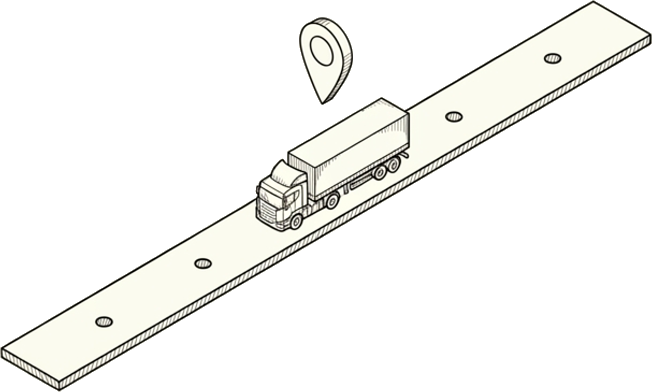
The keyword here is augmentation, not replacement. Good AI for trucking companies is built to support the people already doing the work. It handles the data sorting, the pattern recognition, and the routine tasks. The human still handles the relationship building, the negotiation, and the judgment calls that require context. A dispatcher who uses AI effectively can manage more loads per day without feeling overwhelmed.
What to Look for in an AI Dispatch Tool
Not every AI system is built the same. When evaluating options, carriers and brokers should consider a few key factors. First, integration matters. The tool should connect with the existing transportation management system or at least pull data from common sources like load boards and electronic logging devices. A system that requires manual data entry defeats part of the purpose.
Second, transparency is important. Some AI systems are black boxes where you get a recommendation but no insight into how it was reached. For dispatching, it helps when the system can explain why it suggested a particular load or rate. This builds trust and allows the dispatcher to override with confidence when needed.
Third, the system should be tailored to the size and type of operation. A small carrier with five trucks has different needs than a large fleet with dedicated lanes. Look for configurability rather than a one-size-fits-all approach. The best tools let users set rules about maximum deadhead, preferred customers, and driver rest periods.
Fourth, real-time updates are essential. Freight moves fast, and an AI that only updates once a day is already outdated. Look for systems that process new data continuously and can adjust recommendations as conditions change.
Finally, consider the learning curve. If the tool is too complex, dispatchers will avoid it. A clean interface and straightforward workflows make adoption much easier. Training time should be measured in hours, not weeks.
Practical Examples of AI in Dispatch Workflows
To make this concrete, imagine a typical day for a dispatcher named Maria. She has 15 trucks on the road and a mix of spot loads and contract freight. In the past, she would start her morning by calling each driver to get an update. Then she would check three different load boards, cross-reference rates, and start making phone calls to brokers. By 10 a.m., she might have booked two loads. With an AI system, her morning looks different. The system has already checked in with each driver via text. It has scanned available loads and ranked them by profitability and fit. Maria opens her dashboard and sees a list of top five loads, each with a recommended rate and a reason why it matches a specific truck. She reviews, adjusts if needed, and books three loads in the time it used to take for one.
Later in the day, a driver calls in with a problem. The receiver is closed, and the driver is stuck. The AI system detects the delay, checks the driver's remaining hours, and automatically suggests nearby reloads that could still work if the delivery is pushed to the next day. Maria can decide whether to take one of those reloads or send the driver to a hotel. The system does not make the decision, but it gives her options she might not have thought of in the moment.
Another example involves rate negotiation. A broker sends a load offer that is slightly below market. The AI system flags it as low compared to recent lane averages and suggests a counteroffer. Maria uses that data to negotiate a better rate. The broker agrees because the counter is still reasonable. Without the AI, Maria might have accepted the first offer or spent ten minutes researching rates manually.
Why the Human Element Still Matters
It would be easy to assume that AI for trucking companies is all about removing people from the equation. That is not the case. The best results come from combining machine efficiency with human empathy and experience. Dispatchers build relationships with drivers and brokers over years. They know which drivers prefer long hauls and which ones like to be home every night. They know which brokers pay on time and which ones haggle. AI cannot replicate that trust.
What AI can do is handle the data overload so the dispatcher has more mental energy for those relationships. A dispatcher who is not exhausted by constant firefighting is better equipped to be patient with a frustrated driver or to negotiate a fair rate with a tough broker. The technology is a force multiplier, not a replacement.
This is where the concept of lunetms AI for trucking companies comes into focus. The goal is to automate the parts of dispatch that are repetitive and data-intensive, while leaving the human-centric parts to the people who are best at them. When done well, the result is a more efficient operation, happier drivers, and better customer service.
For carriers and brokers looking to stay competitive, the question is not whether to adopt AI but how to do it in a way that respects the craft of dispatching. Start small, pick one workflow that causes the most friction, and test a tool there. Over time, the value becomes clear, and the technology becomes a natural part of the day.
Ultimately, the companies that embrace this shift will be the ones that can do more with the same number of people. That is the real promise of lunetms AI for trucking companies: not a futuristic fantasy, but a practical way to make the daily work of dispatching less stressful and more productive. The industry has been talking about change for years. Now the tools are here, and they are worth a serious look.
 LinkedIn
 Facebook
 Instagram
 YouTube
Ends · LUNETMSAITRUCKINGCOMPANIESDEN